StyleSense
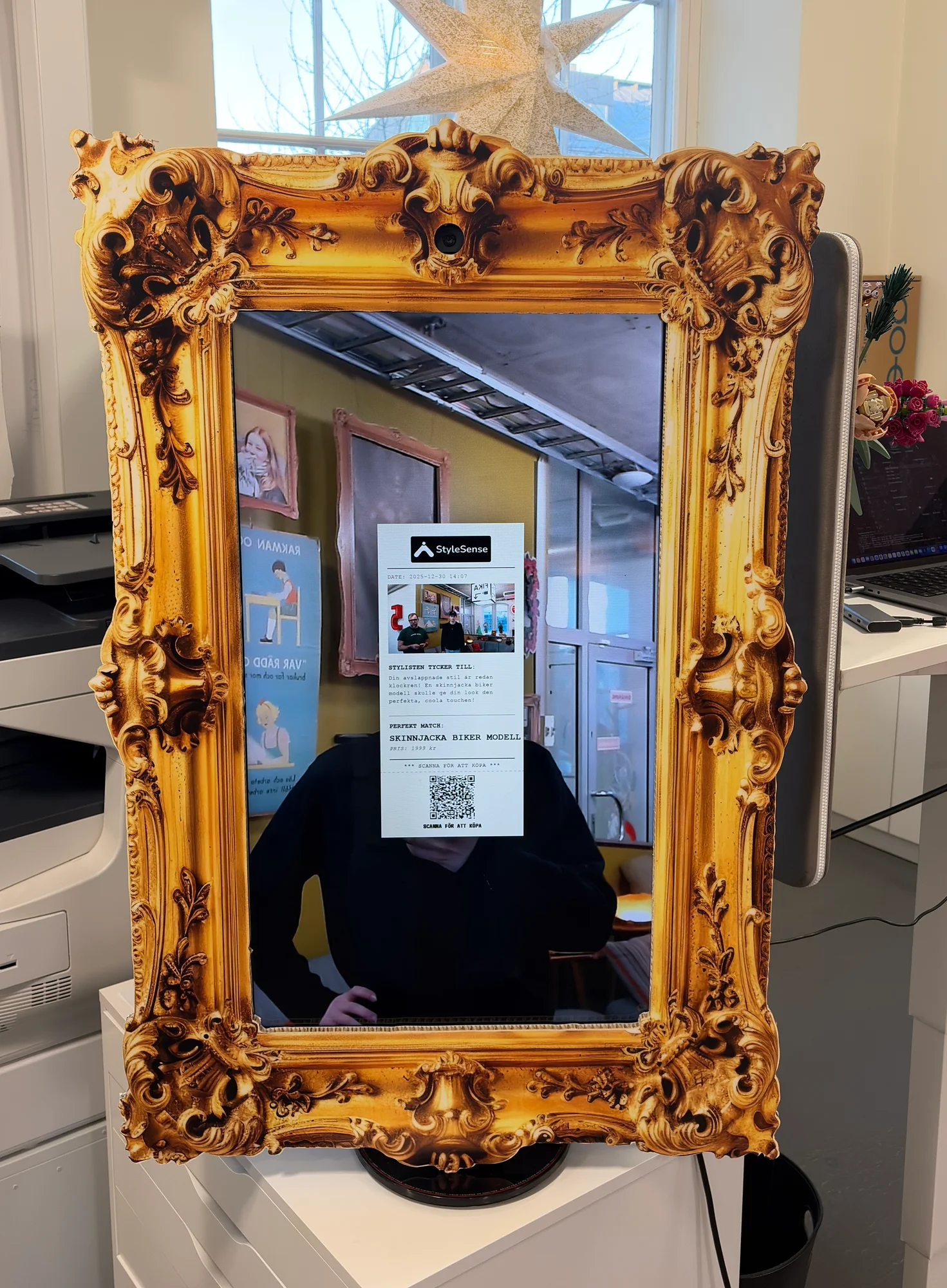
An interactive mirror that offers personalized style advice based on what you are wearing.
- Type
- School project
- My role
- High-fidelity prototype
- Collaborators
- Fabian Portada Vinberg, Samuel Stone, Yousef Al Tall
Making a store window worth stopping for
The challenge was to make a store window more engaging and give the store a way to keep the experience fresh. We explored a playful interaction that could respond to the person in front of it, rather than show the same content to everyone.
My role in the prototype
I worked with Fabian Portada Vinberg, Samuel Stone, and Yousef Al Tall. My responsibility was the high-fidelity prototype, turning the mirror concept into something we could demonstrate and test.
The prototype paired an HTML interface with a Python backend that used Google Gemini for outfit analysis and recommendations.
Developing and testing the concept
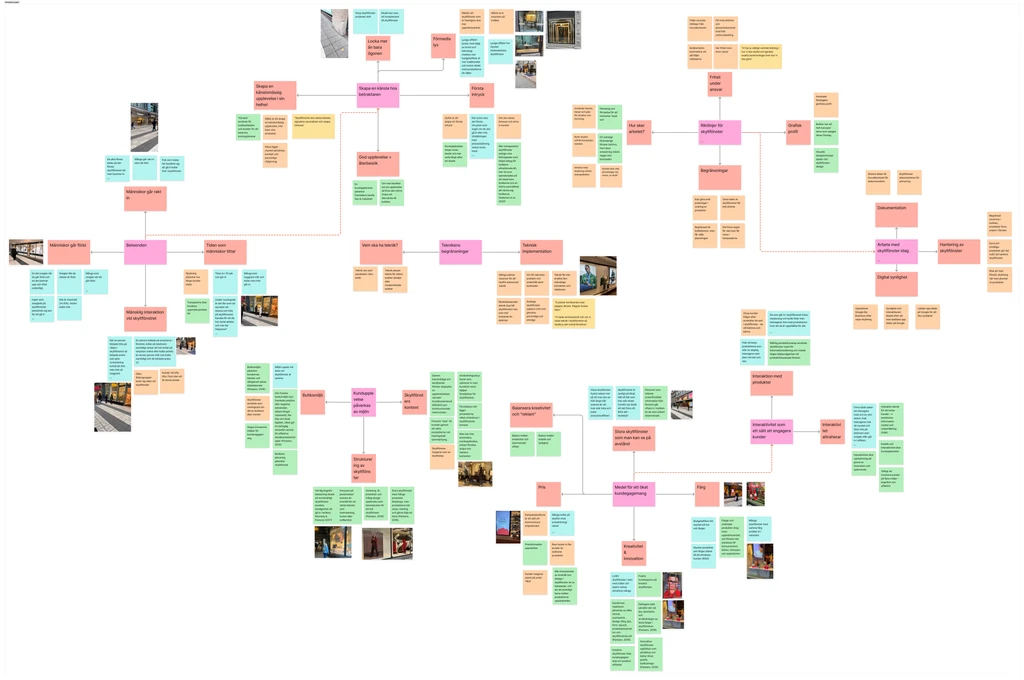
Our team followed a Double Diamond process. We began with observations, literature research, and thematic analysis, then developed storyboards, user flows, and scenarios before building the prototype.
We tested the prototype with a visual merchandiser and end users.
One visual merchandiser emphasized that a storefront display has to catch the attention of people passing by. They are not necessarily looking for an interaction, so the display needs to give them a reason to stop.
A mirror that responds to its visitor
The result was StyleSense: a physical mirror with a digital interface that analyzes a visitor's outfit and offers encouraging style suggestions, including recommendations connected to products in the store. We built and tested it as a high-fidelity prototype.